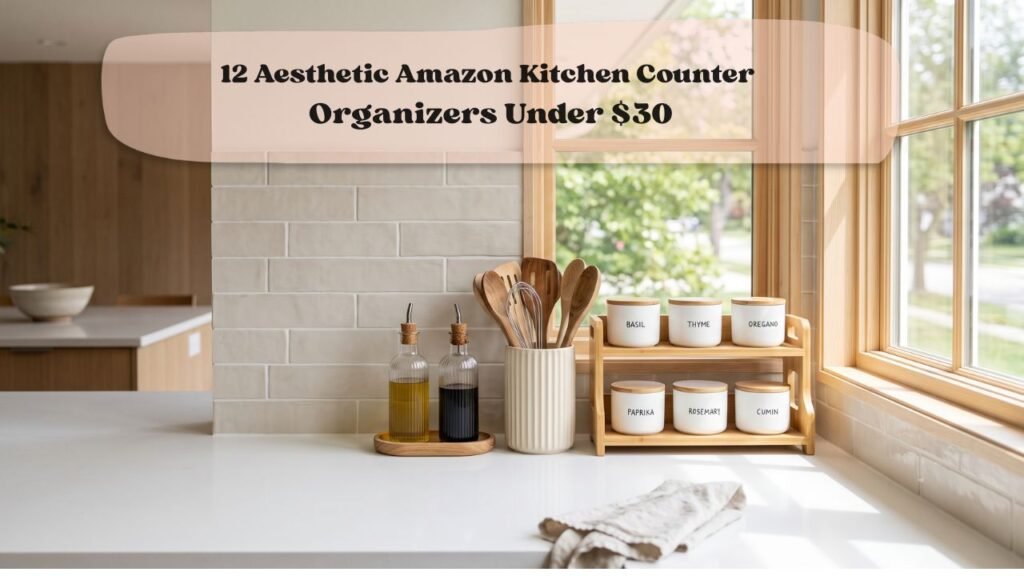
Few things disrupt the rhythm of daily cooking quite like a disorganized kitchen. When cookware is precariously stacked, deep drawers turn into catchalls, and pantry shelves hide expired ingredients behind clutter, meal preparation quickly becomes stressful and inefficient.
Creating an organized kitchen does not require custom cabinetry or a full-scale renovation. By adopting a zonal storage framework, utilizing vertical shelf height, and incorporating modular, space-saving organizers, you can double your usable capacity while keeping countertops completely clear.
Affiliate Disclosure: As an Amazon Associate, I earn from qualifying purchases. This post contains affiliate links, meaning we may receive a small commission at no extra cost to you if you purchase through these links.
📌 Love these kitchen storage ideas? Hover over any image in this post and click the red Save button to pin it directly to your Pinterest Home Decor Board for easy reference later!
In This Guide
- The Principle of Zonal Storage Mapping in the Kitchen
- Zone 1 — Upper Cabinets: Doubling Vertical Shelf Space
- Zone 2 — Deep Drawers: Custom Compartmentalization
- Zone 3 — Lower Cabinets & Cookware: Eliminating the Pan Avalanche
- Zone 4 — Under the Kitchen Sink: Navigating Plumbing Obstacles
- Zone 5 — The Pantry & Dry Goods: Visual Inventory Systems
- Zone 6 — Countertops & Dead Nooks: Clearing the Prep Zone
- Common Kitchen Storage Mistakes to Avoid
- Frequently Asked Questions About Kitchen Storage
The Principle of Zonal Storage Mapping in the Kitchen
The foundation of an efficient kitchen is “Zonal Storage Mapping.” Rather than storing items wherever there is empty space, group items by functional workflow zones:
- Prep & Cooking Zone: Daily spices, oils, spatulas, cutting boards, and cookware grouped around the stovetop.
- Cleaning & Sink Zone: Dish soaps, scrub brushes, trash bags, and cleaning sprays concentrated under the sink.
- Dry Storage & Pantry Zone: Baking essentials, grains, canned goods, and snacks stored together on dedicated shelves.
- Service & Dining Zone: Everyday plates, bowls, coffee mugs, and glassware positioned near the dishwasher.
Zone 1 — Upper Cabinets: Doubling Vertical Shelf Space
Standard upper cabinets often have 12 to 15 inches of vertical clearance between shelves, but stacks of plates or mugs only use the bottom few inches. This leaves the entire upper half of the cabinet empty.
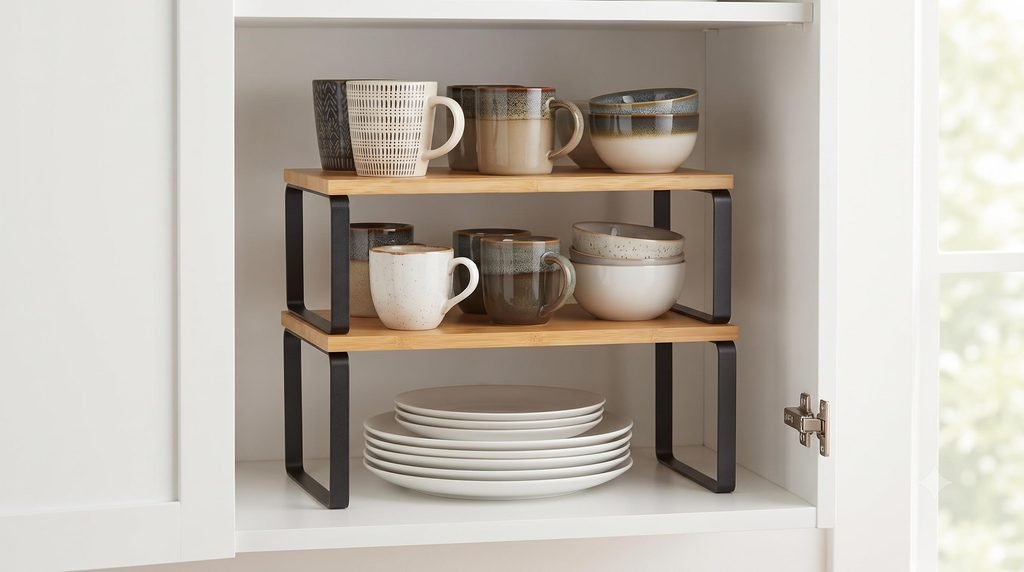
1. Layer Expandable Shelf Risers for Plates and Glassware
Instead of nesting mismatched bowls and plates in unstable towers, insert modular shelf risers to create an extra elevated storage level.
Simple Trending Bamboo Cabinet Organizer Shelves (Set of 2)

Best for: Doubling vertical plate, bowl, and mug storage inside upper kitchen cabinets.
Why it fits: Featuring natural bamboo shelf tops with sturdy black metal frame legs, this 2-piece set can be stacked vertically or expanded side-by-side. It creates a secondary surface layer, allowing you to grab salad plates from the top tier without unstacking heavy dinner plates underneath.
What to consider: Measure your cabinet interior height and depth to decide whether side-by-side expansion or vertical stacking best fits your dinnerware.
Check the product on Amazon (paid link)
2. Install Turntables (Lazy Susans) in High Corner Cabinets
Deep upper corner cabinets are notorious for swallowing small jars. Placing a smooth-spinning turntable on upper shelves brings vinegar bottles, honey jars, and oils into direct reach with a simple spin.
Zone 2 — Deep Drawers: Custom Compartmentalization
Deep pull-out kitchen drawers offer convenient access, but without interior boundaries, spatulas, whisks, and measuring spoons quickly tangle into a chaotic jumble.
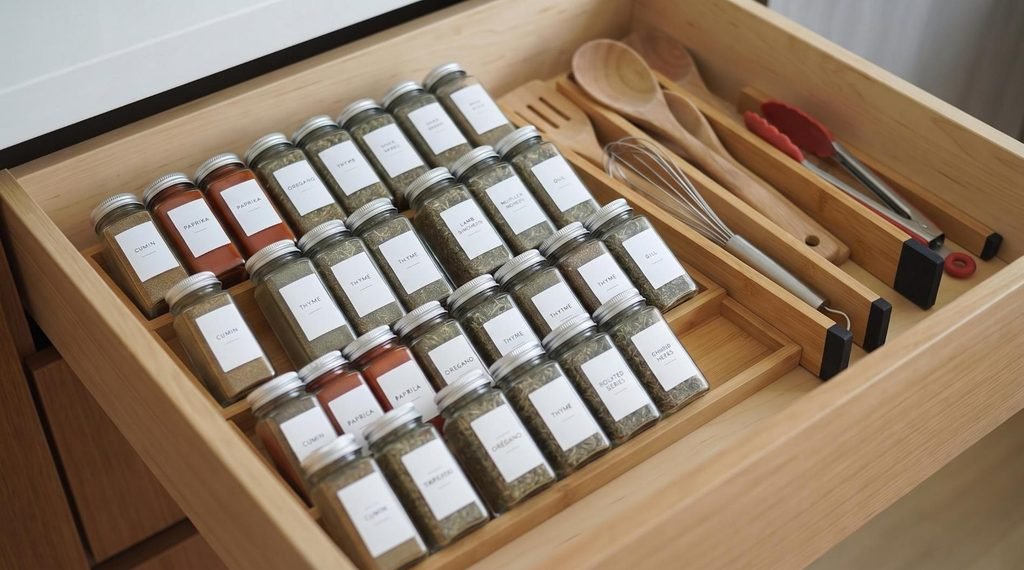
3. Tame Deep Drawers with Spring-Loaded Bamboo Dividers
Adjustable, spring-loaded dividers instantly divide wide drawers into tailored vertical channels, keeping long kitchen tools, rolling pins, and dish towels separated.
Thomas Grace Homewares Spring-Loaded Bamboo Drawer Dividers (Set of 4)

Best for: Sectioning deep kitchen drawers into customized, organized compartments.
Why it fits: Crafted from 100% natural bamboo with internal tension springs, these expandable dividers lock firmly against drawer walls without drilling or adhesive. Soft foam rubber end pads protect cabinet interiors while keeping heavy ladles, spatulas, and food wraps upright in straight rows.
What to consider: Measure your drawer length from front to back to verify that the spring expansion range fits snugly.
Check the product on Amazon (paid link)
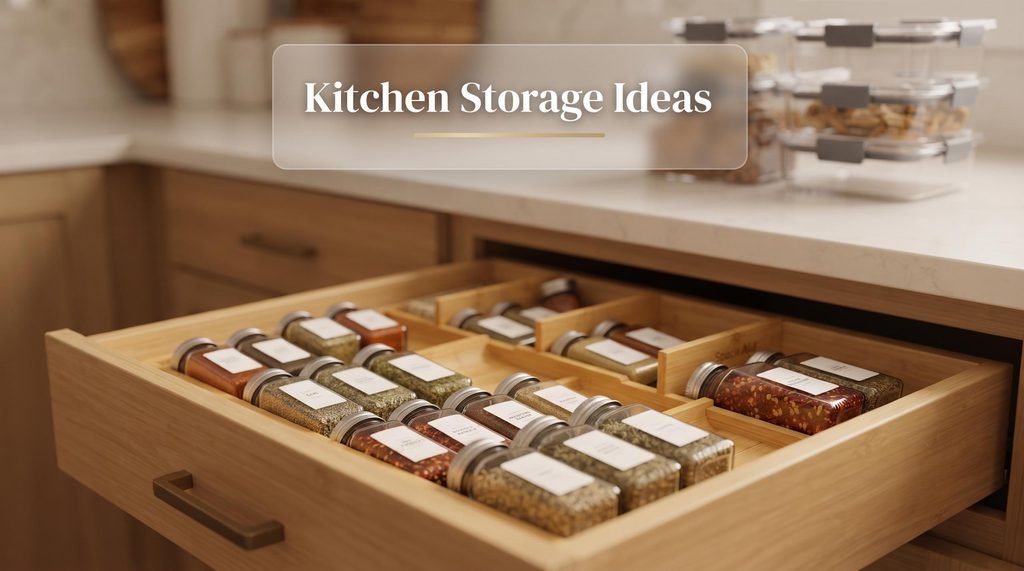
4. Angle Spices with Tiered In-Drawer Insert Trays
Storing round spice jars upright in a drawer hides their labels, while storing them in a wall cabinet leads to knocked-over bottles. A slanted in-drawer tray angles jars outward so you can read every spice label at a glance.
SpaceAid Bamboo Expandable 4-Tier In-Drawer Spice Rack Tray

Best for: Storing spice jars horizontally with labels clearly visible inside pull-out drawers.
Why it fits: Designed with a 4-tier slanted bamboo frame, this tray expands from 12 inches to 23 inches wide to fit standard drawer dimensions. The angled tiers prevent round spice jars from rolling when opening or closing the drawer, making meal seasoning fast and effortless.
What to consider: Requires at least 3 inches of drawer depth clearance when loaded with standard-sized spice jars.
Check the product on Amazon (paid link)
Zone 3 — Lower Cabinets & Cookware: Eliminating the Pan Avalanche
Nesting non-stick skillets, cast iron pans, and baking sheets inside one another scratches cookware coatings and causes noisy clatter every time you pull out a frying pan.
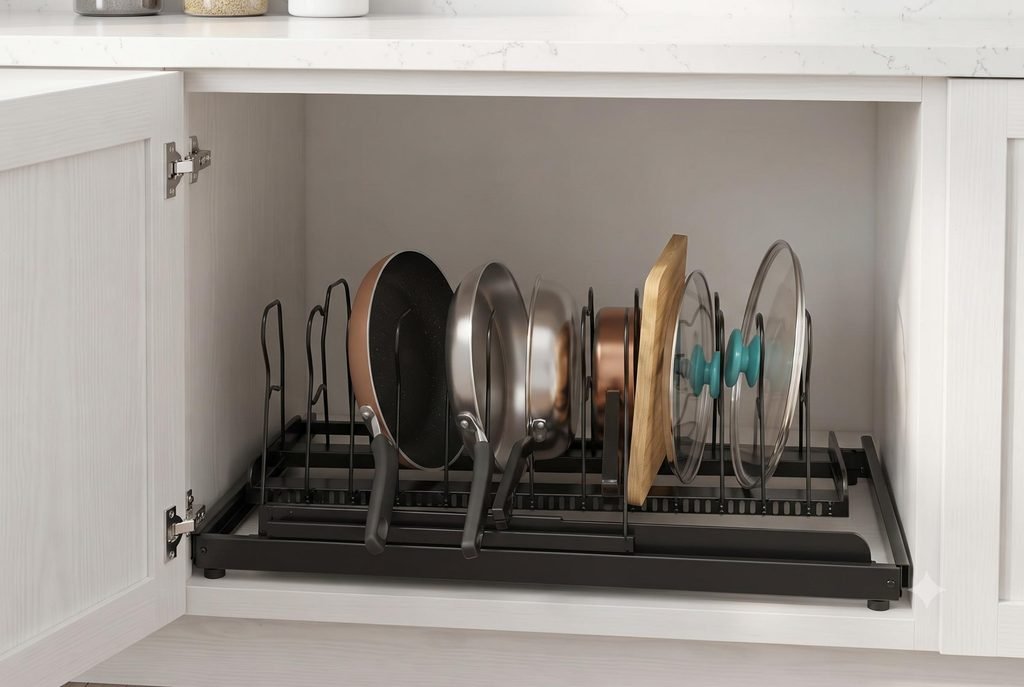
5. Store Pots, Skillets, and Lids Vertically with Expandable Racks
Storing cookware vertically turns lower cabinets into file-like systems where every pan, lid, and cutting board slides out independently.
Simple Houseware Expandable Pan & Lid Rack (10 Compartments, Black)

Best for: Storing frying pans, Dutch ovens, baking sheets, and lids vertically in lower cabinets.
Why it fits: Featuring an expandable black steel base track with 10 adjustable U-shaped wire dividers, this rack lets you customize the slot width for thin sheet pans or deep sauté skillets. The notched wire grooves hold pot lid handles securely upright, eliminating cookware stacks completely.
What to consider: Can be used as one long expandable unit or separated into two individual racks for separate cabinets.
Check the product on Amazon (paid link)
6. Mount Roll-Out Sliding Wire Drawers for Heavy Small Appliances
Heavy appliances like blenders, slow cookers, and food processors are difficult to reach in deep base cabinets. Installing roll-out sliding metal drawers brings back-of-cabinet appliances into full view with a smooth pull.
Zone 4 — Under the Kitchen Sink: Navigating Plumbing Obstacles
The under-sink cavity is notoriously awkward due to central drain pipes, garbage disposals, and water filtration lines. Standard rectangular bins collide with plumbing traps, leaving vertical space wasted.
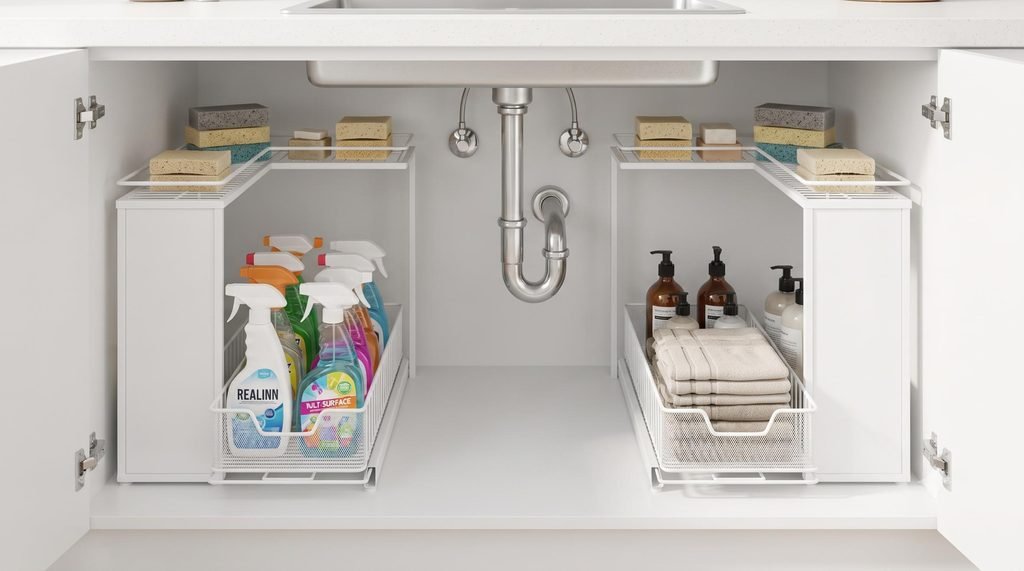
7. Install 2-Tier L-Shaped Pull-Out Organizers Around Pipes
An L-shaped organizer features a narrow top tier and a wide bottom sliding basket, allowing the unit to fit snugly around vertical drain pipes.
REALINN 2-Tier L-Shaped Pull-Out Under Sink Organizer (White)

Best for: Organizing dishwashing soaps, cleaning sprays, and sponges around under-sink plumbing.
Why it fits: Built with an L-shaped steel frame, this organizer features a narrow top shelf that clears garbage disposal units, while the wide bottom wire basket glides out smoothly on sliding tracks. It provides accessible multi-level storage for tall spray bottles and cleaning supplies.
What to consider: Check whether your sink plumbing drops down on the left or right side to orient the narrow top basket correctly.
Check the product on Amazon (paid link)
8. Utilize Cabinet Door Backs for Dish Towel Hooks and Sponge Baskets
Take advantage of the back of under-sink cabinet doors by attaching adhesive wire baskets for dishwashing tablets or hanging stainless steel towel hooks.
Zone 5 — The Pantry & Dry Goods: Visual Inventory Systems
When half-empty pasta boxes and bags of flour are crammed onto pantry shelves, items get lost and food goes to waste. A clear visual inventory system ensures you know exactly what ingredients you have on hand.
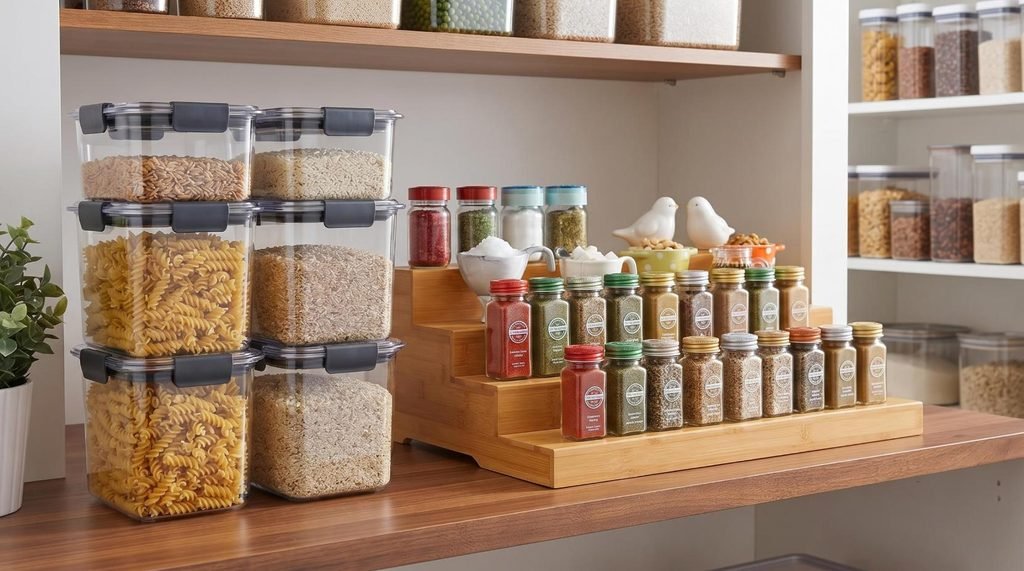
9. Decant Dry Staples into Modular Airtight Containers
Decanting grains, pasta, oats, and cereal into stackable airtight containers preserves freshness, prevents pests, and standardizes shelf organization.
Rubbermaid Brilliance Airtight Food Storage Containers (Set of 2, 9.6-Cup)

Best for: Storing flour, pasta, rice, and dry pantry staples in airtight, leak-proof containers.
Why it fits: Made from crystal-clear, shatterproof BPA-free plastic, these stackable containers feature 360-degree transparency and 4-hinge latches with airtight silicone seals. Their uniform rectangular footprint stacks securely to maximize vertical pantry shelf height.
What to consider: Crystal-clear construction makes it easy to monitor ingredient levels; keep a dry-erase marker handy to label cooking instructions on the side.
Check the product on Amazon (paid link)
10. Elevate Canned Goods with Expandable 3-Tier Step Risers
Canned beans, soups, and baking jars hidden at the back of pantry shelves are easily forgotten. A 3-step stadium riser elevates each row above the one in front of it.
RoyalHouse Bamboo 3-Tier Expandable Step Shelf Organizer

Best for: Elevating canned goods, spice jars, and condiments on deep pantry shelves.
Why it fits: Crafted from smooth natural bamboo, this 3-tier stadium shelf expands horizontally to fit your exact pantry shelf width. By stepping items upward, it provides unobstructed sightlines to every can and jar, preventing duplicate purchases.
What to consider: Clean with a damp cloth; ensure your upper shelf clearance allows for the height of cans sitting on the top tier.
Check the product on Amazon (paid link)
Zone 6 — Countertops & Dead Nooks: Clearing the Prep Zone
Clear countertops provide the visual breathing room and physical workspace needed for enjoyable cooking. Clearing counter clutter involves taking advantage of narrow crevices and vertical wall space.
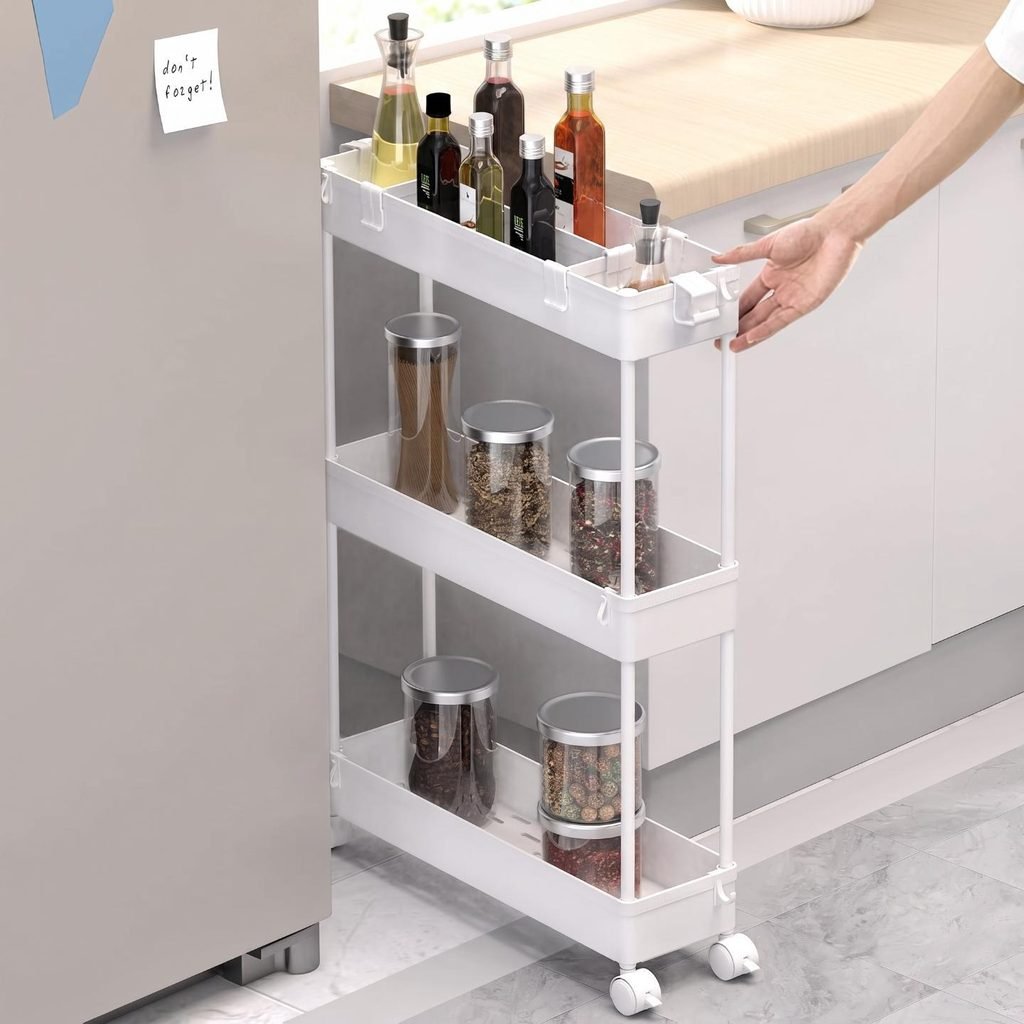
11. Slide a Slim Rolling Cart Into Appliance Gaps
The narrow 5- to 6-inch gap between your refrigerator and counter or beside the pantry is an ideal storage spot for tall cooking oils, bottled waters, and condiments.
SAKA 3-Tier Slim Rolling Storage Cart (White)

Best for: Utilizing narrow gaps beside refrigerators, stoves, and pantry cabinets.
Why it fits: With an ultra-slim profile and smooth-rolling castor wheels, this 3-tier white utility cart slides into tight gaps. The deep guardrail baskets keep tall olive oils, vinegar bottles, and seasonings organized and accessible with a quick pull.
What to consider: Best placed in a narrow gap where surrounding appliances or cabinets provide lateral stability while rolling.
Check the product on Amazon (paid link)
12. Mount a Magnetic Knife Strip to Free Up Counter Space
Bulky wooden knife blocks occupy valuable countertop square footage. Mounting a magnetic knife bar on a backsplash keeps chef’s knives sharp, dry, and within arm’s reach while freeing up preparation space.
Common Kitchen Storage Mistakes to Avoid
- Over-Decanting Everything: Decanting specialty items that you use infrequently creates unnecessary maintenance. Focus on high-turnover staples (flour, sugar, oats, rice, coffee).
- Stacking Cookware Without Protectors: Stacking frying pans directly on top of each other damages non-stick and enamel finishes. Use vertical racks or felt pan protectors.
- Ignoring Upper Shelf Headspace: Leaving the top 6 inches of upper cabinets empty wastes significant storage capacity. Always incorporate expandable shelf risers.
- Using Mismatched Storage Bins: Mixing random colored plastic tubs and wire baskets creates visual clutter. Stick to consistent materials like natural bamboo, clear acrylic, and matte white/black metals.
Frequently Asked Questions About Kitchen Storage
How do I maximize storage in a small kitchen with few cabinets?
Focus on vertical and hidden zones. Add expandable shelf risers inside upper cabinets, use a 2-tier L-shaped organizer under the sink, slide a slim rolling cart between the fridge and counter, and store pots vertically in lower cabinets.
What is the best way to organize spices in a kitchen?
If you have drawer space, an expandable angled in-drawer spice tray is the most ergonomic option because labels face upward. For pantry shelves, use an expandable 3-tier bamboo stadium riser to keep jars visible.
How do I organize awkward corner kitchen cabinets?
Use a heavy-duty turntable (Lazy Susan) on upper corner shelves so you can spin items into view without reaching into dark corners, or install two-tier pull-out wire baskets for deep lower corner cabinets.
Final Thoughts
An organized kitchen is built on deliberate zoning, vertical space utilization, and easy-to-maintain modular systems. By dividing drawers with spring-loaded bamboo, storing cookware vertically, and maximizing under-sink and pantry shelves with sliding and tiered organizers, your kitchen transforms into a calm, functional, and clutter-free culinary workspace.
📌 Want to come back to these ideas later? Save this post to your Pinterest Home Decor Board so you can easily reference these kitchen organization hacks and product layouts when you’re ready to declutter!
You May Also Like