
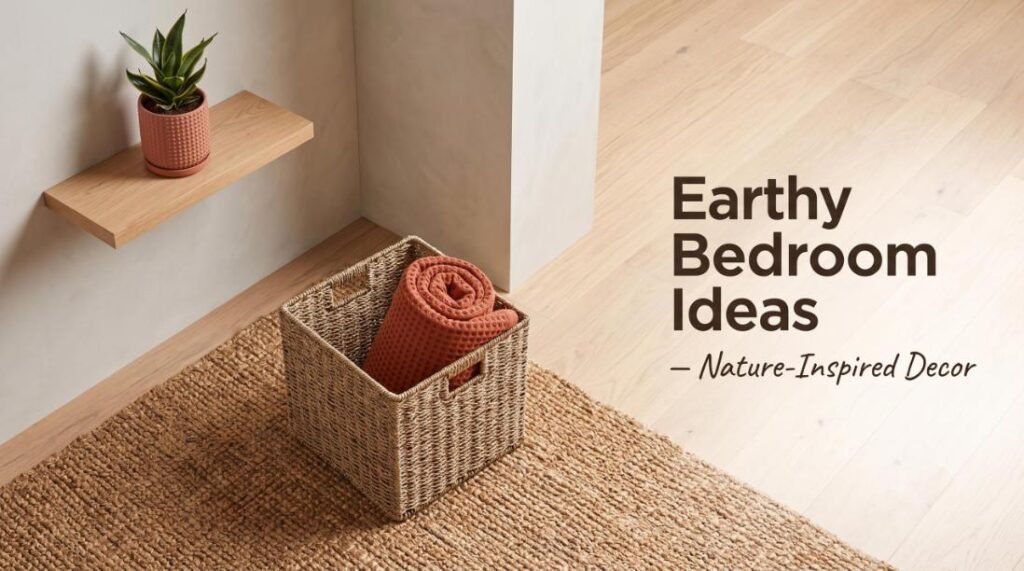
Designing a bedroom around an earthy aesthetic is about more than painting a wall green or buying a houseplant. True nature inspired design leans into organic textures, tactile materials, balanced earth tones, and warm ambient lighting to create a grounded sanctuary where your mind and body can truly rest.
When executed without a clear framework, earth tones can sometimes risk looking dark, muddy, or visually flat. By balancing foundational neutrals with deliberate botanical and clay accents, and layering raw materials like washed linen, natural wood, chunky jute, and stoneware, you can create a bedroom that feels modern, elevated, and deeply cozy.
Affiliate Disclosure: As an Amazon Associate, I earn from qualifying purchases. This post contains affiliate links, meaning we may receive a small commission at no extra cost to you if you purchase through these links.
📌 Love these earthy bedroom ideas? Hover over any image in this post and click the red Save button to pin it directly to your Pinterest Home Decor Board for easy reference later!
In This Guide
- The Appeal of the Earthy Bedroom Aesthetic
- Earth-Tone Color Palettes: Applying the 60-30-10 Rule
- The Layered Bed Formula for Organic Comfort
- Natural Materials & Furniture Pairings
- Flooring & Underfoot Warmth: Selecting Natural Fiber Rugs
- Biophilic Styling: Bringing the Outdoors In
- Ambient Lighting Rules for a Grounded Sanctuary
- Common Earthy Bedroom Styling Mistakes to Avoid
- Frequently Asked Questions About Earthy Bedrooms
- Final Thoughts
The Appeal of the Earthy Bedroom Aesthetic
The modern earthy bedroom draws heavily from biophilic design the concept of connecting indoor environments directly to the natural world. In a bedroom setting, this approach creates an inherently calming visual atmosphere.
Rather than relying on sterile surfaces or high-gloss synthetic finishes, an earthy space celebrates authentic imperfections: the relaxed drape of washed flax, the subtle ridges of handwoven seagrass, and the porous matte warmth of unglazed clay. These natural elements soften room acoustics, diffuse harsh daylight, and ground the room in a soothing, organic rhythm.
Earth-Tone Color Palettes: Applying the 60-30-10 Rule
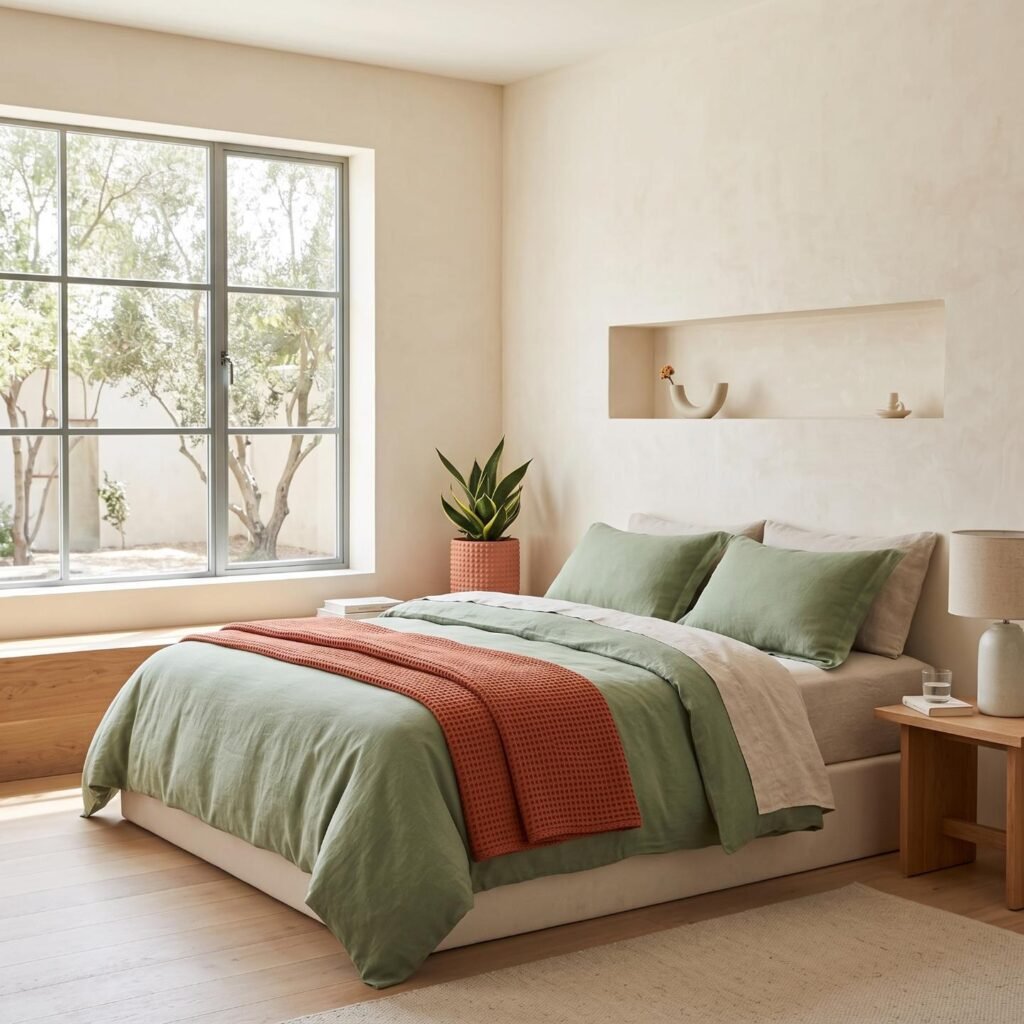
Achieving cohesion across an earthy palette requires thoughtful color distribution. Using the classic 60-30-10 interior design rule prevents multiple earth tones from competing with one another.
Base Neutrals (Sand, Warm Taupe, Cream)
Your dominant 60% color forms the visual backdrop of the room. Instead of stark, clinical cool whites or icy grays, choose warm, light-reflective neutrals such as warm cream, limestone, sandy beige, or soft oatmeal. Apply this shade across primary walls, large linen drapery panels, and large-scale architectural surfaces to maintain an open and airy foundation.
Rich Accent Tones (Sage, Olive, Terracotta, Clay)
Your secondary 30% color adds visual substance and depth. Botanical hues such as muted sage or dusty olive green—work exceptionally well across primary bedding layers, upholstered headboards, or accent area rugs.
The remaining 10% serves as your grounding accent. Warm terracotta, burnt clay, rusty ochre, or deep charcoal introduced through accent pillows, small planter pots, or artwork provides a warm visual punctuation that prevents the room from feeling washed out.
The Layered Bed Formula for Organic Comfort
In an earthy bedroom, the bed is the tactile focal point of the space. Building a bed with distinct, breathable layers creates the effortless, lived-in luxury characteristic of organic modern design.
Washed Linen Sheets and Breathable Duvet Covers
Natural flax linen is the cornerstone of organic bed styling. Its open weave promotes airflow while its naturally rumpled texture adds relaxed depth without feeling unkempt.
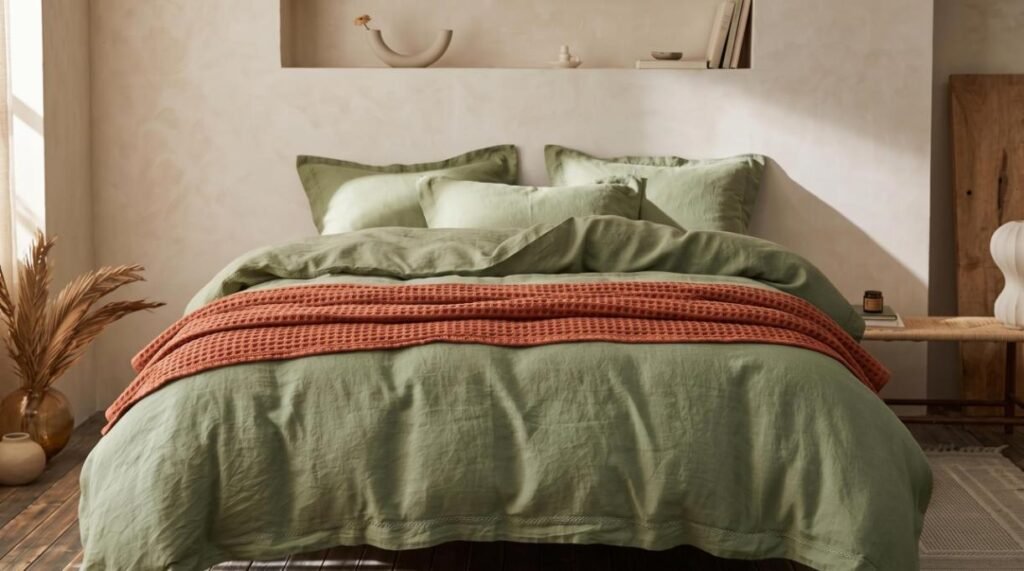
Simple&Opulence 100% Linen Duvet Cover Set (Sage Green)

Best for: Adding natural texture and soothing botanical color as the primary bed layer.
Why it fits: Crafted from 100% washed linen, this duvet set introduces a soft, breathable drape in a tranquil sage green tone. Subtle crossed embroidery detailing along the edges adds understated artisanal craftsmanship, providing organic visual depth across the mattress.
What to consider: Pure linen softens significantly with each wash; embrace its natural, casual wrinkles rather than attempting to press it flat.
Check the product on Amazon (paid link)
Waffle Quilts and Tactile Throw Blankets
To break up flat surfaces, fold a textured blanket across the lower third of the bed. A distinct woven grid introduces contrasting geometry while adding practical temperature regulation.
Brielle Home 100% Cotton Waffle Weave Bed Blanket (Burnt Orange)

Best for: Introducing a rich terracotta accent and deep woven texture across the foot of the bed.
Why it fits: Made from 100% lightweight, all-season cotton, this blanket features a dimensional square waffle weave. Its burnt orange tone provides the exact rich, clay-colored contrast needed to warm up sage green and neutral linen bedding.
What to consider: The dimensional waffle knit has natural elasticity; wash on gentle cycles to preserve its structured weave.
Check the product on Amazon (paid link)
Styling Textured Accent Pillows in Natural Fabrics
Complete the bed arrangement with two to three accent pillows in varied organic textiles. Pair raw silk, slubby linen, or bouclé shams in complementary earth tones to create a varied, tactile stack against the headboard.
Natural Materials & Furniture Pairings
A successful earthy interior balances contrasting wood grains, woven fibers, and mineral textures so that no single material overwhelms the room.
Balancing Light Oak, Walnut, and Rattan
Avoid matching furniture sets, which can make a bedroom feel rigid and uninspired. Instead, pair a light oak bed frame with a rich walnut floating shelf or a natural cane nightstand. Mixing two complementary wood finishes adds collected warmth and architectural dimension.
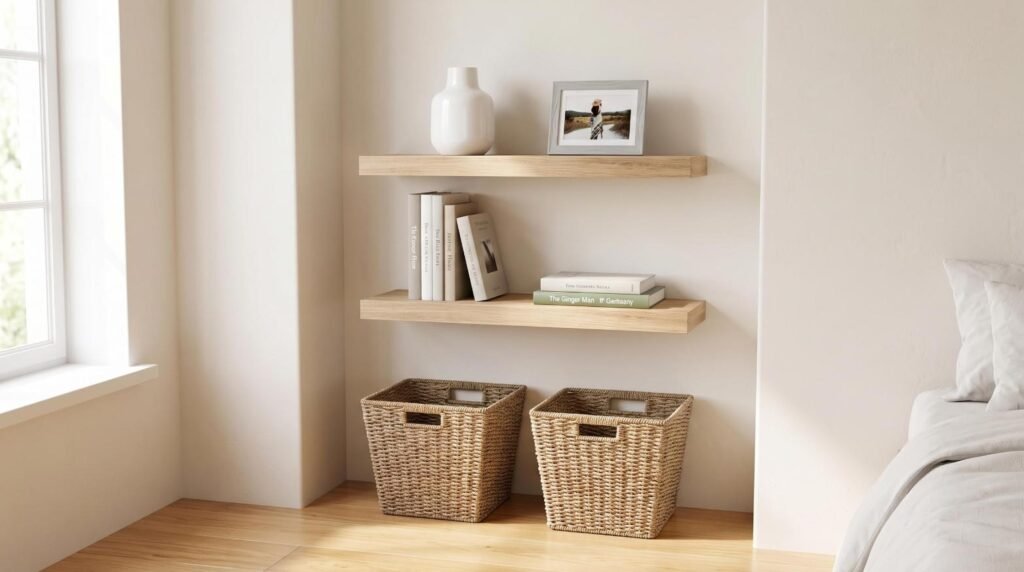
Ballucci 24-Inch Natural Oak Floating Shelves (Set of 2, 8″ Deep)

Best for: Vertical display and adding warm wood grain to bare bedroom walls.
Why it fits: Featuring an authentic light natural oak wood grain finish and an 8-inch deep profile, these shelves provide a sturdy platform for styling framed botanical art, stoneware vessels, and books without occupying floor space. The hidden metal mounting bracket creates clean, seamless lines against the wall.
What to consider: Ensure the concealed steel brackets are mounted securely into wall studs or heavy-duty drywall anchors before loading them with heavy stone decorative objects.
Check the product on Amazon (paid link)
Incorporating Ceramics, Stone, and Raw Elements
Balance warm wood furniture with textured mineral accents. Incorporating hand-thrown pottery, travertine trays, and woven seagrass bins breaks up hard horizontal surfaces while providing functional bedroom storage.
HOONEX Decorative Woven Seagrass Storage Baskets (Set of 2)
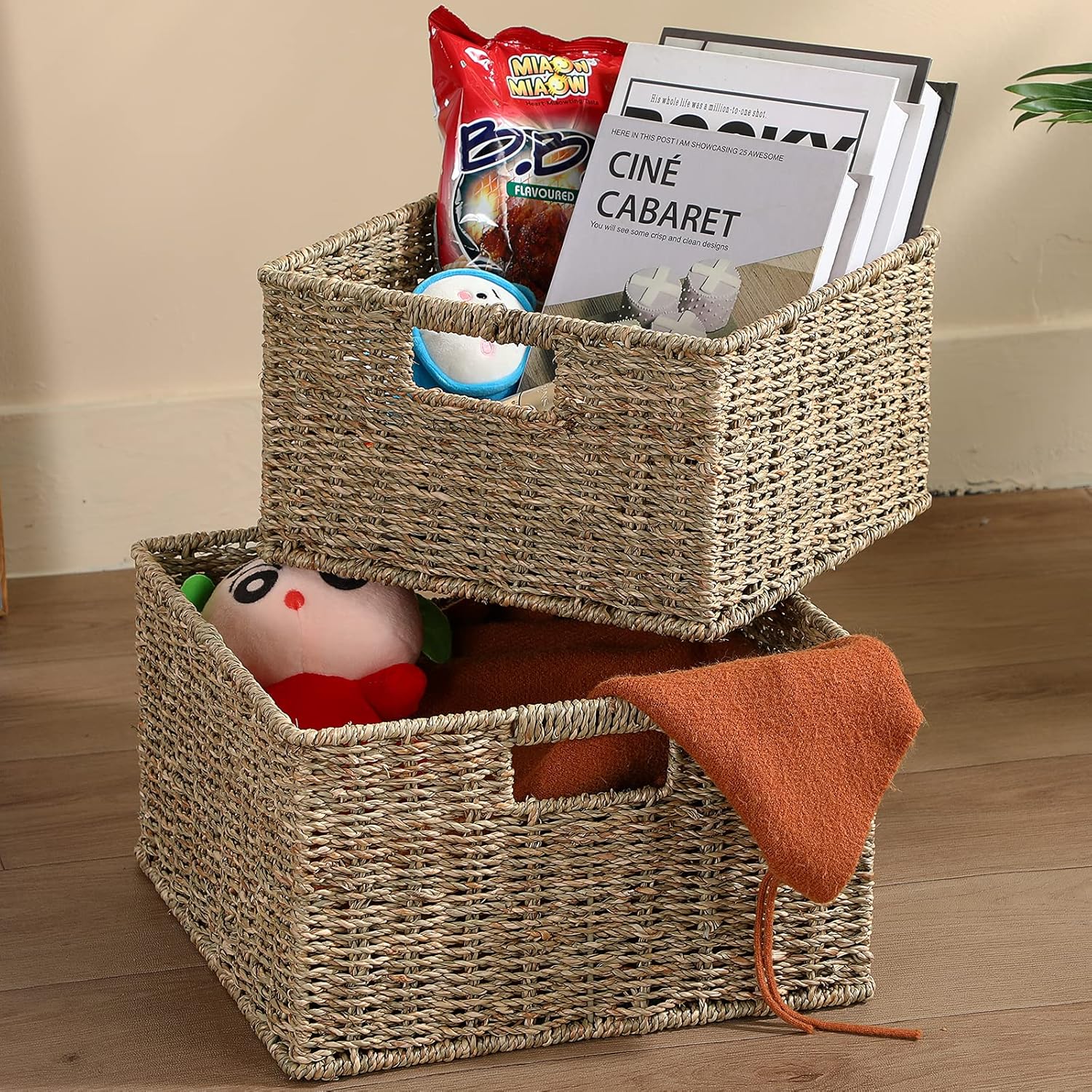
Best for: Organizing bedside throws, reading materials, or extra linens with natural woven texture.
Why it fits: Handcrafted from natural woven seagrass with integrated carrying handles, this nesting basket set introduces rich golden-tan fiber tones. Their tapered square profile tucks neatly beside a nightstand or underneath a floating shelf to conceal daily clutter.
What to consider: As handcrafted natural fiber pieces, expect subtle, organic variations in fiber color and texture.
Check the product on Amazon (paid link)
Flooring & Underfoot Warmth: Selecting Natural Fiber Rugs
Flooring provides the physical and visual anchor for an earthy bedroom retreat. Grounding the bed with organic plant fibers introduces substantial texture directly underfoot.
Jute, Seagrass, and Flatweave Rug Layering
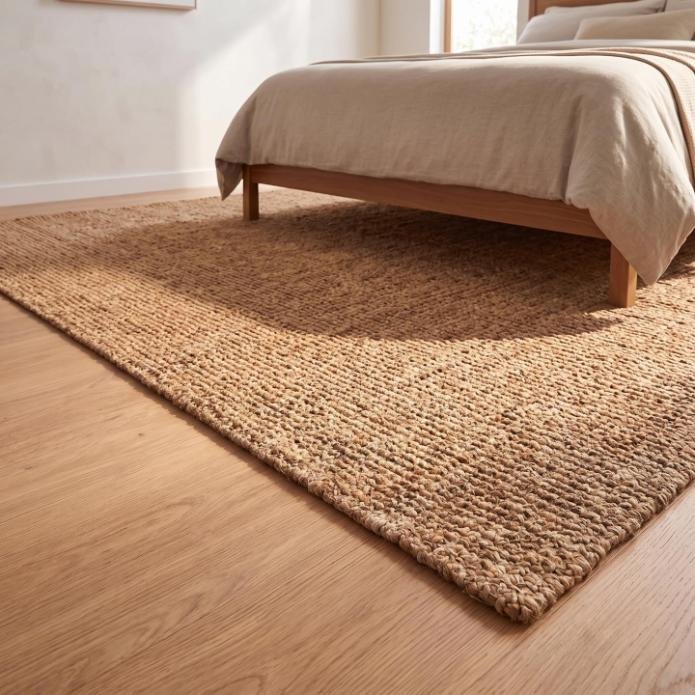
A thick, handwoven jute area rug brings raw textural depth and golden undertones to hard flooring surfaces. If you prefer extra softness beneath your feet when stepping out of bed, layer a smaller, plush wool flatweave or vintage-washed Turkish runner directly over the jute base.
JONATHAN Y Pata Hand-Woven Chunky Jute Area Rug

Best for: Grounding the bedroom layout with durable, thick natural fiber texture.
Why it fits: Handwoven from natural jute fibers in a substantial chunky loop weave, this rug anchors the bed frame while introducing warm golden-tan earth tones. Its thick braided construction provides durable underfoot texture that complements hardwood and neutral floor finishes.
What to consider: Natural jute rugs benefit from a non-slip rug pad underneath to prevent shifting and protect underlying flooring.
Check the product on Amazon (paid link)
Biophilic Styling: Bringing the Outdoors In
Living plants and porous clay vessels add vitality and organic movement, transforming a curated room into a living sanctuary.
Choosing and Styling Indoor Houseplants
Select bedroom-friendly indoor plants with sculptural foliage and air-purifying qualities. Varieties like Snake Plants (Sansevieria), ZZ Plants, Satin Pothos, or Fiddle Leaf Figs thrive in standard indoor lighting conditions while adding sculptural greenery across dressers, corners, and wall shelves.
Terracotta Planters and Botanical Vignettes
Porous, unglazed terracotta complements natural plant greenery with its warm reddish-clay tone. Grouping planters in varying heights creates curated botanical vignettes that draw the eye around the room.
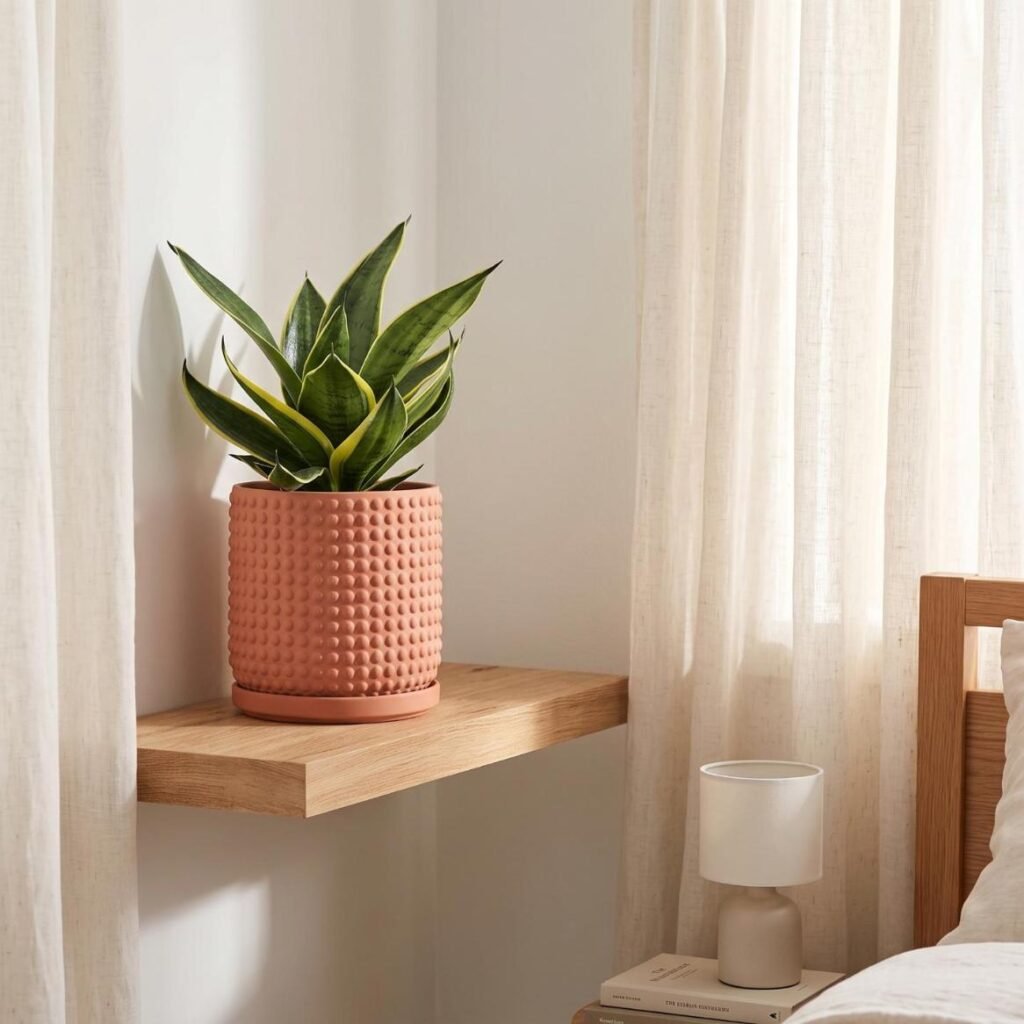
D’vine Dev 6-Inch Beaded Terracotta Planter Pot with Saucer

Best for: Housing bedside greenery in a textured, porous clay vessel.
Why it fits: Crafted from unglazed natural reddish terracotta clay, this 6-inch planter features an embossed beaded hobnail texture around its cylinder silhouette. It includes a functional drainage hole and a matching clay saucer, making it ideal for styling a small houseplant on a nightstand or oak shelf.
What to consider: Unglazed terracotta is naturally porous and breathes well for root health; use the included saucer to protect wooden tabletop surfaces from moisture.
Check the product on Amazon (paid link)
Ambient Lighting Rules for a Grounded Sanctuary
Lighting is critical to making an earthy bedroom feel warm rather than dim. Avoid harsh overhead fixtures in favor of diffused, multi-level ambient lighting.
Soft 2700K Warm Lighting and Dimmable Fixtures
Always select warm white LED bulbs calibrated between 2200K and 2700K color temperature. Cool white light (above 3500K) drains the warmth from wood and clay tones, whereas warm lighting enriches earth-tone pigments and promotes natural circadian relaxation in the evening.
Stoneware Bases and Pleated Linen Shades
Table lamps with ceramic or stoneware bases add sculptural interest during the day and cast a diffused, gentle glow through natural fabric shades at night.
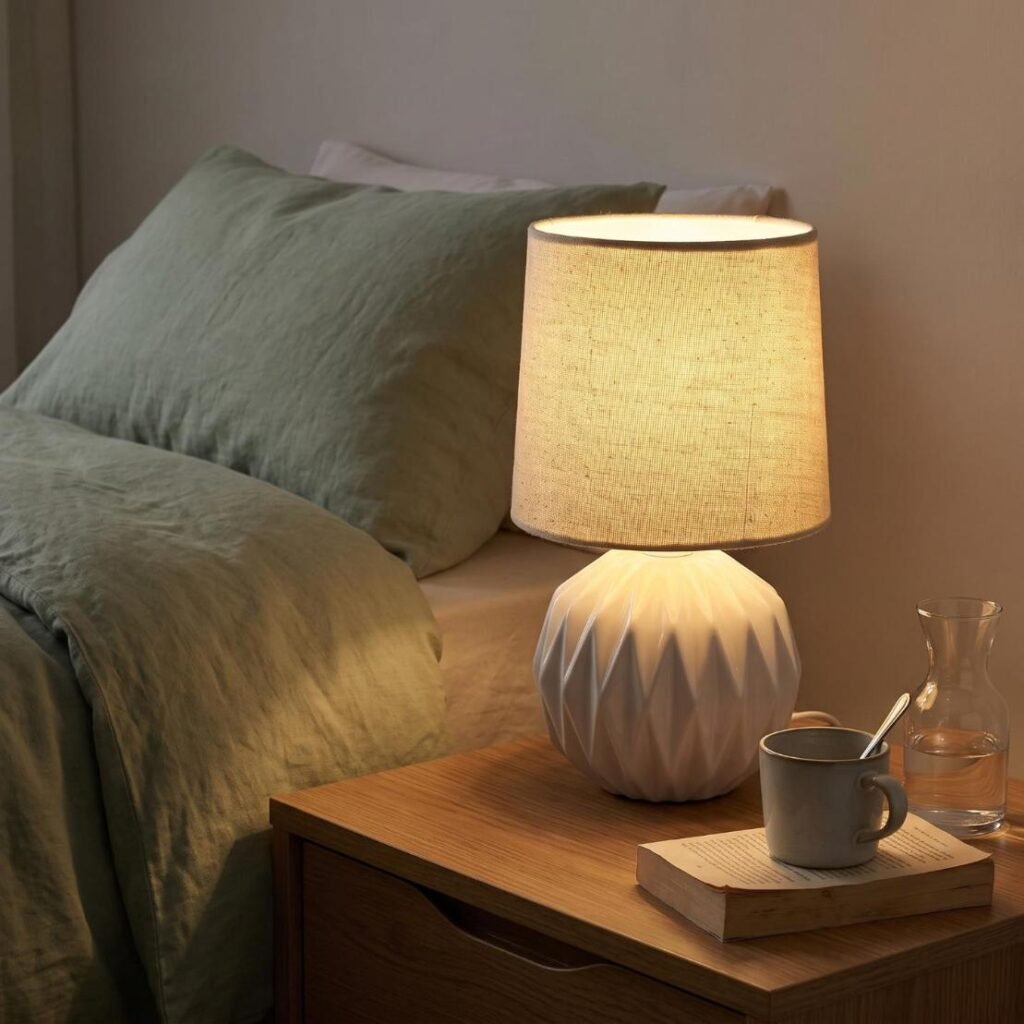
White Geometric Textured Ceramic Bedside Lamp with Linen Shade

Best for: Delivering warm, diffused bedside lighting with artisanal ceramic texture.
Why it fits: Measuring 12 inches high, this bedside lamp features a faceted geometric white ceramic base paired with a natural oatmeal linen drum shade. It includes a warm 7W LED bulb that casts a soft, inviting glow across bedside tables without harsh glare.
What to consider: Its compact 12-inch height makes it ideal for smaller bedside nightstands, low headboards, or styled shelving vignettes.
Check the product on Amazon (paid link)
Common Earthy Bedroom Styling Mistakes to Avoid
- Overusing Cold Grays: Cool slate grays and blue-tinted whites clash with warm earth tones. Replace them with warm greiges, sand, and creamy whites.
- Relying on High-Gloss and Synthetic Sheen: High-shine polyester, glossy plastic decor, and polished chrome disrupt the organic aesthetic. Prioritize matte, unglazed, and natural woven finishes.
- Creating a Muddy Monoculture: Using only dark brown or olive without balancing lighter sand or cream base tones can make the bedroom feel cave-like. Maintain the 60% light neutral foundation.
- Neglecting Scale and Proportions: Scattering too many tiny plants and trinkets creates visual clutter. Opt for fewer, larger statement pieces like a substantial jute rug, a textured ceramic lamp, and a well-placed terracotta planter.
Frequently Asked Questions About Earthy Bedrooms
What colors define an earthy bedroom palette?
An earthy palette is built on warm foundational neutrals (cream, linen, taupe, sand) layered with nature-inspired tones such as sage green, deep olive, terracotta, burnt clay, warm ochre, and natural wood tones.
How do I stop an earthy bedroom from feeling too dark?
Maintain a 60% ratio of light, warm neutrals on your walls, ceiling, and large curtains. Incorporate light oak wood finishes and layer multi-point warm lighting (2700K) across bedside tables and floor corners.
Can I mix different wood finishes in an earthy bedroom?
Yes. Mixing two complementary wood finishes—such as light natural oak shelving with rich walnut or rattan accents—creates collected visual depth and prevents the space from looking like a uniform showroom set.
Final Thoughts
Creating an earthy bedroom sanctuary is an exercise in intentional layering. By establishing a warm neutral foundation, introducing botanical and terracotta accents through breathable linen and waffle bedding, and grounding the room with natural oak, jute, and ceramic elements, you cultivate a peaceful, restorative space that feels close to nature.
📌 Want to come back to these ideas later? Save this post to your Pinterest Home Decor Board so you can easily reference these styling formulas and material pairings when you are ready to decorate!
You May Also Like
- Small Bedroom Decor Ideas: How to Style a Cozy Space Without the Clutter
- 7 Cozy Bedroom Lighting Ideas for a Relaxing Nightly Routine
- Minimalist Storage Solutions for Small Apartments and Dorms